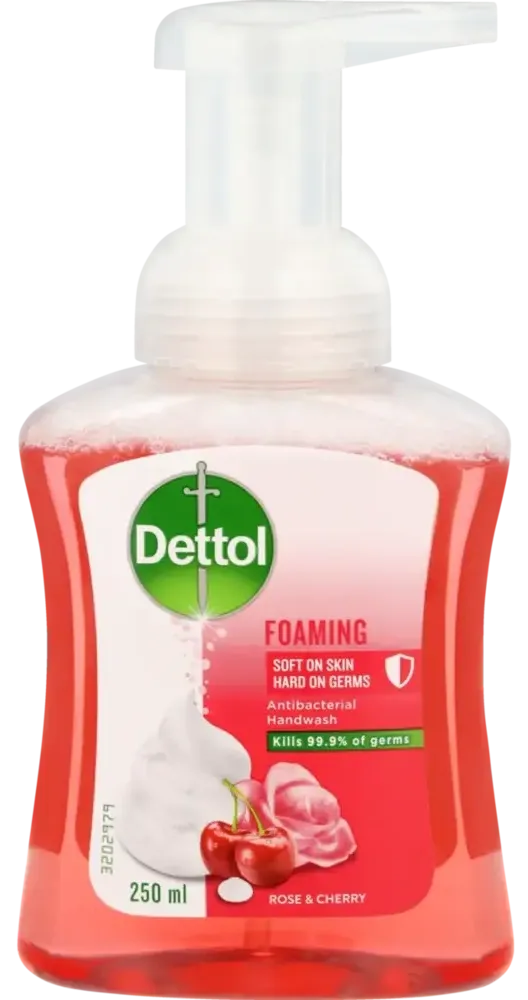
Soft on Skin, Hard on Germs


In our daily routine our hands are constantly picking up germs, which are tiny living organisms also known as microbes.2 Germs that can make people unwell may get on our hands after we use the toilet, handle raw meat, or touch anything that has germs on it.1
Our hands can carry millions of germs.3 Some of these germs can survive on our hands for a few minutes to a few hours, and on hard surfaces for a couple of hours to several months. And just ten seconds of contact can be enough to transfer these germs from our unwashed hands to other people or objects.3
When we don’t wash our hands, the germs on our hands can be spread to objects that we touch and to other people.1 By washing our hands regularly with soap and water, we remove germs from our hands. Washing hands regularly is the single most important hygiene step in fighting the spread of germs, and good hand washing practices help people and their communities stay healthier.1
It’s easy to remember to wash your hands when they look dirty, but a good rule of thumb is to wash your hands before touching anything that needs to stay clean, and after touching anything that could leave germs on your hands.2
Make the following a part of your hand washing routine:2,4,5
Step 1: Wet your hands with clean, running water (warm or cold).2,4
Step 2: Apply enough soap to cover all of your hands.2,4
Step 3: Rub your hands together with the soap, lathering the backs of your hands, between your fingers, and under your nails. Scrub your hands for at least 20 seconds.2,4
Step 4: Rinse your hands well under clean, running water, making sure to remove all the soap.2,4
Step 5: Dry your hands using a paper towel, a clean hand towel or an air dryer if you are in a public toilet.2,4
Soap is more effective than water alone to remove dirt and germs from your skin.5,6 Rubbing your hands together to lather the soap causes friction that helps to lift the dirt and germs from your skin. Scrubbing all over your hands, including under the nails, for at least 20 seconds is recommended because it removes more germs than when you only wash for shorter lengths of time.6
While washing your hands with soap and water is recommended in most situations, if you are out and about and your hands have no visible dirt, then you can use a hand sanitiser with at least 60% alcohol such as Dettol Instant Hand Sanitiser to help stop the spread of germs.4
How to use hand sanitiser:
Step 1: Apply the hand sanitiser to the palm of one hand. Check the label for the correct amount to use.2,4
Step 2: Rub your hands together, making sure that the hand sanitiser covers all surfaces of your hands and fingers.2,4
Step 3: Keep rubbing hands together until they are dry. This will take around 20 seconds.2,4
Keep in mind that although hand sanitisers can reduce the number of germs on hands in many situations, they do not get rid of all types of germs, particularly when hands are visibly dirty or greasy. They also might not remove harmful chemicals from hands such as pesticides and heavy metals.4
RB-M-104891
Soft on Skin, Hard on Germs
Antibacterial Foam Formula
First published: 12th February 2021
Last updated: 4th June 2024
Cleaning and disinfecting your home can help remove germs. But how do you disinfect your house? Here we talk through what to clean and provide tips on cleaning methods around the house.
Bedrooms can be a haven for dust and allergens. With so many hours spent in bed every night, your bedroom is one of the most important rooms to keep clean and hygienic to prevent dust and allergens from collecting.
First formulated in 1929 and Dettol soon found a place in the home, in addition to being used in hospitals and by doctors. Today, we are a world leading hygiene brand trusted by millions.