


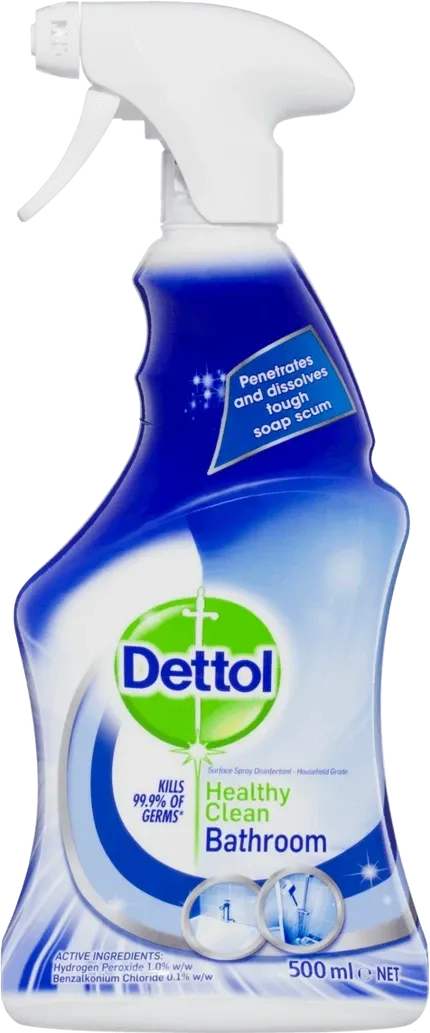
Dissolves tough soap scum



There are a number of frequently touched surfaces in the bathroom that can be contaminated with germs, like the toilet flush button or handle, toilet seat, taps, sinks, door handles and bathtubs. 2,3 Even face cloths, towels, bath sponges, and toothbrushes can become a hotspot for germs if they aren’t properly maintained.2 Because bathrooms tend to have a lot of moisture, there is also a risk of mould growing if the bathroom isn’t well ventilated. 3
The toilet bowl can also house a significant number of germs. 1,3 Thankfully, the risk of picking up germs directly from the toilet bowl itself is low. 2,3 However, germs from the toilet can splash into the air and other surfaces when you flush and can end up on your hands. 1,3 This is a particular concern when someone in your family is sick with a tummy upset.3
Bathroom cleaning should aim to stop germs from spreading by reducing the germs on these surfaces, as well as preventing the growth of mould. Along with washing your hands, bathroom cleaning is an essential part of keeping your home and family hygienic.3
Step 1: Generously apply a toilet bowl cleaner and let it sit for a few minutes per the instructions on the product before scrubbing with a stiff-bristled toilet brush. If possible, use a toilet cleaner that removes limescale, followed by a disinfectant to discourage the build-up of germs. 3 Alternatively, you can pour a cup of baking soda into the bowl and let it sit for a few minutes before brushing.4 Make sure to clean under the rim as well as the surface of the bowl. 3
Step 2: Afterwards, flush the toilet to remove the chemicals and germs, keeping the toilet lid down to help prevent splashback. 3 You can then insert an antibacterial in-the-bowl or in-the-cistern cleaning block to continuously release disinfectant and keep it hygienic between flushes. 3
Step 3: Finally, wipe down the toilet seat, rim and flush button or handle using an antibacterial product like Dettol Healthy Clean Bathroom Spray3. Don’t forget to disinfect the toilet brush after the cleaning is done.
Step 1: Spray the bathtub with an appropriate detergent and leave for the duration recommended on the product to allow the dirt and grime to loosen.
Step 2: Scrub the bathtub with a brush, sponge or cloth to maximise dirt and germ removal. Then, rinse the bathtub with hot, clean water – this step is important for hygienic cleaning. After cleaning, thoroughly dry the bathtub to stop germs from growing.
Step 1: Start by descaling the showerhead as, when left unused, it can harbour a lot of germs. 3 Remove the shower head and soak it in an appropriate descaling agent or white vinegar overnight.4 If your showerhead is not removable, try filling a strong plastic bag with enough descaling agent to submerge the showerhead nozzle and tie it in place. Remove it in the morning and run it under hot water to.4
Step 2: Spray the shower with an appropriate detergent and leave for the duration recommended on the product to allow the dirt and grime to loosen. You may need to follow additional steps if you need to from the shower. Scrub the shower with a brush or sponge to maximise dirt and germ removal. Then, rinse the shower with hot, clean water – this step is important for hygienic cleaning. 3
Step 3: Spray the shower door with an appropriate detergent and leave for a few minutes before wiping down. Alternatively, make a paste by adding a few drops of distilled white vinegar to a cup of baking soda and apply it directly to the door.4 Leave it for an hour then rub with a microfibre cloth. Rinse and buff dry with a fresh, dry microfibre.4
Step 1: If your bathroom floor is tiled, start by vacuuming to help remove dust and other allergens. 3 For a basic clean, spray the tiles with an appropriate cleaning product and leave for the duration recommended on the product before wiping down. You can also mix water and distilled white vinegar in equal amounts to make a homemade cleaning solution. 5
Step 2: To clean the grout, scrub using a stiff-bristled grout brush dipped in a bleach-based product. You can also use a paste made by combining baking soda and water.5 Ensure windows are open and the place is well ventilated if using a bleach product. After scrubbing, rinse with a clean, damp cloth. Once cleaned, dry tiled surfaces thoroughly and make sure your bathroom is always well ventilated to prevent mould from building up.3
Clean the drain by pouring white vinegar or baking soda down the drain and flush with hot.4 Use an antibacterial product to wipe down the tap and sink basin to ensure the surface is properly disinfected. 3 Since a tap handle is a frequently touched surface, there’s a high risk of picking up germs so definitely don’t forget to clean them regularly! 2
Spray the window with a generous amount of glass cleaner and wipe it from top to bottom with a microfiber cloth. If there are any streaks, give it another wipe until the glass is clear.
Ensure the fan is turned off. Vacuum the dust from the grill and then wipe it down with a damp cloth. If the cover is removable, soak it in warm, soapy water, and then rinse and dry before reattaching.4
Dettol has a great range of cleaning products specifically designed for use as bathroom cleaners, which you can trust to kill 99.9% of germs*:
*Which germs are killed varies between products – refer to the product label.
Take on these simple habits to help ensure your bathroom is always kept fresh and hygienic:
RB-M-104889.
*DISCLAIMER
Always read the label and follow the directions for use.
References:
Dissolves tough soap scum
First published: 15th February 2021
Last updated: 9th January 2025
Cleaning and disinfecting your home can help remove germs. But how do you disinfect your house? Here we talk through what to clean and provide tips on cleaning methods around the house.
Bedrooms can be a haven for dust and allergens. With so many hours spent in bed every night, your bedroom is one of the most important rooms to keep clean and hygienic to prevent dust and allergens from collecting.
First formulated in 1929 and Dettol soon found a place in the home, in addition to being used in hospitals and by doctors. Today, we are a world leading hygiene brand trusted by millions.


