Household grade disinfectant



Floors need to be cleaned regularly to effectively remove dirt and germs. Aside from immediately cleaning up any visible dirt or spills that occur over the course of daily life, you should generally aim to do a thorough sweep or vacuum every 1-3 days and mop around once a week.
Taking good care of your floors not only helps to protect them, but also cuts down on the time you spend cleaning. One thing that makes a big difference is enforcing a ‘no shoes indoors’ rule in your home. This helps to minimise the amount of dirt, grime and germs that get tracked in by shoes (especially when it’s rainy) and also stops shoes from scratching the floors. Make it easy for your family and guests by setting up a shoe removal area near your front door, with a spot to sit down and a place to store shoes. You can even have a rag or cleaning cloth tucked away to quickly clean up any errant water or mud when it’s been wet outside.
If a no-shoe policy isn’t practical for your household, you can always place floor mats both outside and inside exterior doors so people can at least wipe their shoes before entering. Other tips are to use floor protectors under furniture, and also adding rugs in play areas to help stop children’s toys from scratching the floor.
The best way to clean your floor really depends on the type of floor you have. However, generally speaking, traditional damp-mopping with an appropriate cleaning solution is the best way to clean most types of flooring.
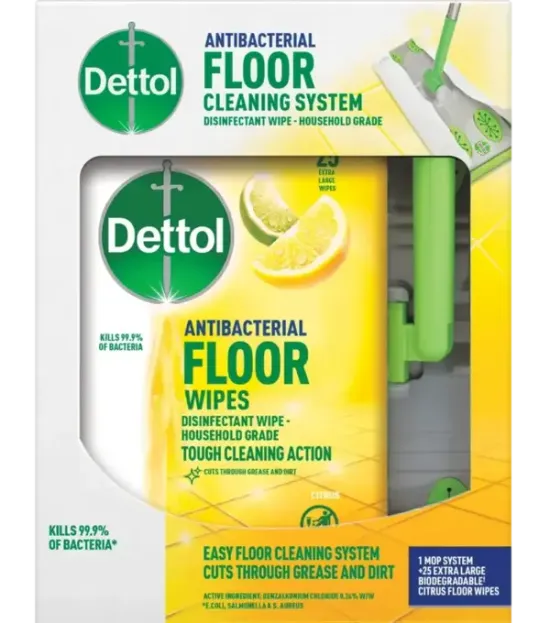
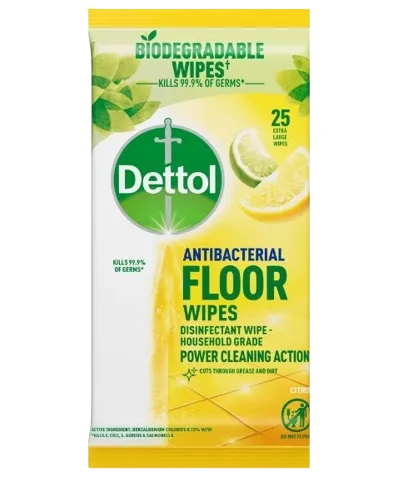
For an extra level of germ protection, you can also go over your floors with Dettol Antibacterial Floor Wipes or the Dettol Floor Cleaning System after mopping. Both kill 99.9% of germs (kills E. coli and S. aureus) and because they’re so easy to use, they’re really handy for everyday cleaning.
Wood or timber floors need some special care in order to keep them clean them without leaving streaks. While wooden floors may be ok with an occasional damp wipe, heavy mopping isn’t actually recommended as it can damage the wood. Instead, preventive measures and routine cleaning are what’s important.
How to clean hardwood floors: Be sure to regularly sweep or vacuum to pick up dust, dirt and hair that might scratch the floor’s surface. When vacuuming, use a soft flooring attachment to protect the floor. You can also use disposable electrostatic cloths or a microfiber dust mop, and you may also opt to use a dusting spray. Make sure to follow the manufacturer’s instructions and to choose products that are appropriate for your floor.
How to clean sticky hardwood floors: Over time, dirt and grime can build up on your hardwood floors that can’t be removed by sweeping or vacuuming. For deep cleaning, use a liquid cleaner that is specifically made for cleaning wood floors, following the instructions carefully. Whether using a cleaning cloth or mop, wring it almost dry so that it’s only slightly damp and avoid getting too much liquid on the floor. Once done, rinse your cloth or mop with clean water, then wring out the excess and use it to remove the cleaner before wiping the floor dry with a clean towel.
For everyday spot cleaning, Dettol Antibacterial Floor Wipes are suitable for use on sealed wooden floors and can provide tough cleaning action to remove grease and dirt.
How to clean engineered wood floors: Since these are still made from wood, the same cleaning tips for hardwood floors apply!
While laminate floors may be tougher than wooden floors, they still need careful maintenance. Just like wood floors, laminate floors can be damaged by water so avoid heavy mopping. To take care of your laminate floors, sweep or vacuum regularly (avoiding equipment that may scratch the surface), wipe up spills straight away and when you need a deeper clean, mop very lightly using water or a product that is specially designed for laminate (preferable recommended by your floor manufacturer).
For everyday cleaning or when you need to disinfect your floor, you can also try Dettol Antibacterial Floor Wipes, which are suitable for use on sealed laminated floors. Another good tip is to sweep or vacuum in the direction that your floor is laid, which helps to pick up debris between interlocking pieces. Finally, never use wax, bleach or acrylic products on laminate floors.
Whether it’s the kitchen, bathroom or living areas, tiles are a great flooring option for many rooms in the home. Tiled floors should be regularly cleaned and disinfected, particularly in rooms where moisture can accumulate and are susceptible to mould. While damp-mopping is the best way to clean most tiled floors, some types need specific care.
How to clean floor tile grout: Grout plays a big role in how clean your tiled floor looks. Tile grout is porous, so unfortunately it stains easily. Start by wiping down the grout with hot water before spraying with a grout-cleaning product according to instructions, making sure it’s appropriate for your type of tile. After letting it stand for the recommended amount of time, scrub with a small soft brush until clean then rinse thoroughly with hot water. Finally, let the grout air dry for 24 hours, then use a grout sealer to help protect against future stains and dirt.
Want to clean floor tile grout with scrubbing, or worried about harsh chemicals? Try using a steam cleaner instead! Steam cleaners are able to provide a deep clean without any harsh chemicals and are also hygienic.
How to clean and shine ceramic tile floors: Ceramic tiles are known for being durable, and mopping is the best way to keep them clean. Use a chamois-style mop, since sponge mops can push dirty water into the grout. Alternatively, you can also use a steam cleaner on ceramic tiles. To avoid water spots forming, don’t let tiles air-dry after mopping – instead, dry them straight away with a clean lint-free cloth.
How to clean slate floors: Slate floors are made of natural stone. Ideally, slate floors should be swept or dust mopped every day, and damp-mopped once a week using an appropriate cleaner (avoid any cleaners that are acidic, like those that contain lemon or vinegar). Applying a sealer every 3-5 years, or as recommended by the manufacturer, can help to protect the floor from stains and dirt.
How to clean flagstone floors: Like slate floors, sweep or dust flagstone floors regularly, damp-mop with an appropriate, non-acidic cleaner, and seal the floor every 3 years (or as recommended by the manufacturer) to help prevent stains.
How to clean marble floors: Look for a cleaner that’s specially made for marble floors and avoid cleaners that are acidic. Also avoid cleaning equipment which may scratch the surface, like brushes with tough bristles.
How to clean tile floors without a mop: For everyday cleaning, the Dettol Floor Cleaning System is easy to use and assemble and is suitable for use on glazed tiles. Not only does it clean and disinfect your floors, but it also leaves a sparkling shine and fresh fragrance.
Damp-mopping once a week is the best way to clean vinyl floors. Make sure to use a detergent that’s appropriate for vinyl floors and avoid abrasive cleaners or scrubbing tools since they might scratch the surface. For everyday cleaning or to remove germs, you can use Dettol Antibacterial Surface Cleaning Wipes.
Polished concrete floors should be regularly mopped with a mild cleaner – avoid using ammonia, bleach or highly acidic cleaning products. Applying a concrete sealant after cleaning can help it become resistant to future stains.
Like other wood floors, avoid using too much water when cleaning bamboo floors. Microfiber mopping should be done once a week using a cleaner that’s suitable for hardwood. Make sure that the mop is just barely damp when you are cleaning, and wipe the floor dry with a clean, soft towel once you finish. The same applies if you are spot cleaning using a sponge or rag.
No matter what material it’s made of, regular care and maintenance along with the right techniques and products will help you achieve a clean floor that you can be proud of!
Always read the label. Follow the directions for use.
Household grade disinfectant
First published: 13th April 2021
Last updated: 9th January 2025
Cleaning and disinfecting your home can help remove germs. But how do you disinfect your house? Here we talk through what to clean and provide tips on cleaning methods around the house.
Bedrooms can be a haven for dust and allergens. With so many hours spent in bed every night, your bedroom is one of the most important rooms to keep clean and hygienic to prevent dust and allergens from collecting.
First formulated in 1929 and Dettol soon found a place in the home, in addition to being used in hospitals and by doctors. Today, we are a world leading hygiene brand trusted by millions.