


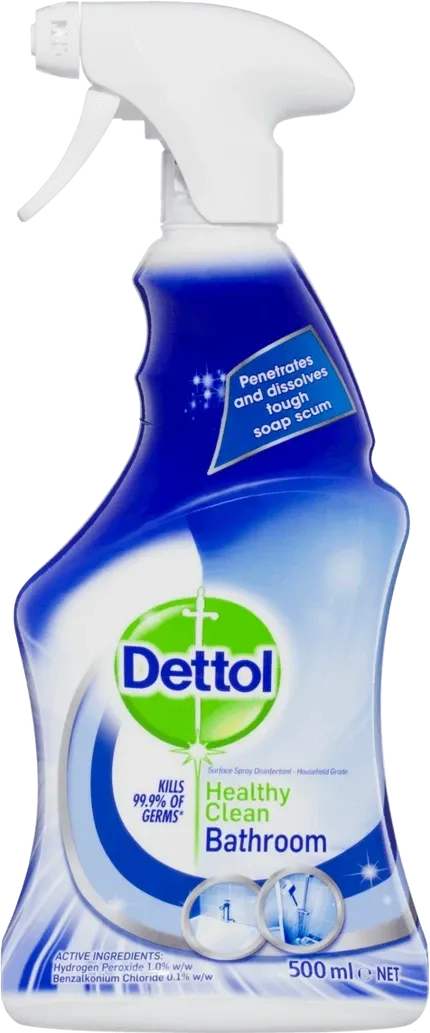
Dissolves tough soap scum



While many people consider the toilet to be the germiest part of their bathroom, studies show that objects such as your toothbrush holder and surfaces such as tap handles and light switches often carry more germs than the toilet seat or flush button.
And while everyday toilet use can cause unpleasant splashes on the toilet seat and nearby surfaces, did you know that leaving the toilet lid up when you flush can spread germs all over the bathroom?
The force and turbulence of the water running and mixing in the toilet bowl when you flush can create huge numbers of tiny droplets and aerosols in the air. These particles can spread up to a metre above the toilet and all around the toilet itself, contaminating the toilet seat and lid, and even nearby floors and walls.
These particles carry germs that can be spread when people touch surfaces where the droplets have landed.
We’ve all heard the phrase ‘cleaning top to bottom’ but when it comes to your toilet, it’s more than just a saying. It makes sense from a hygiene perspective because gravity forces any particles created during the cleaning process to drift downward and settle on surfaces. So it’s a good idea to clean the outside of your toilet from the top down – starting at the flush button and working your way down to avoid spreading germs.
A reusable cloth can be used to clean the toilet, but it must be thoroughly decontaminated before using it on any other surfaces. Add Dettol Laundry Sanitiser when washing reusable cloths in the washing machine to help remove germs. Disposable cloths such as Dettol Antibacterial Disinfectant Wipes are recommended for cleaning messes such as vomit or faeces, then should be thrown out immediately after use.
Finally, don’t forget to wash your hands after cleaning – with Dettol’s range of hand washes, you can be confident that they’ll kill 99.9% of germs to help you stay hygienic.
Always read the label. Follow the directions for use.
RB-M-50027
Dissolves tough soap scum
First published: 14th May 2021
Last updated: 10th June 2024
Cleaning and disinfecting your home can help remove germs. But how do you disinfect your house? Here we talk through what to clean and provide tips on cleaning methods around the house.
Bedrooms can be a haven for dust and allergens. With so many hours spent in bed every night, your bedroom is one of the most important rooms to keep clean and hygienic to prevent dust and allergens from collecting.
First formulated in 1929 and Dettol soon found a place in the home, in addition to being used in hospitals and by doctors. Today, we are a world leading hygiene brand trusted by millions.


