


Dissolves tough soap scum



Mould is a fungus that grows in damp conditions, where there is not much airflow. It can grow indoors or outdoors – basically, anywhere moisture accumulates, mould can and often will grow. Green, white or black mould is common, as is but it can range from grey to orange/brown. When it grows outside, it plays an important role in breaking down organic matter.
Recognising mould is not always easy. It can look like a stain, smudge or discolouration on a surface. Sometimes it can look like a fuzzy growth.
Mould spreads via spores – tiny particles carried through the air. They are so small you can’t see them, but you can breathe them in or get them on your skin after touching a mouldy spot.
As mould grows in moist environments without good airflow, some areas to keep an eye on include:
Inhaling the spores produced by mould may cause health problems, particularly if you’re sensitive or allergic to it. Exposure to mould may trigger the following health effects:
Runny or blocked nose, sneezing
Coughing
Wheezing or respiratory complications
Irritated eyes
Irritated skin
While most people will not experience any health problems from coming into contact with mould, those with weakened immune systems, asthma, allergies or other breathing conditions may be more sensitive to these effects of mould exposure. Contact your doctor if you or a family member suffer health problems after exposure to mould.
It is best to remove mould as soon as it appears.1 If the affected area is small to medium sized, you may be able to remove it yourself.2
Before you begin removing mould, make sure that the area is well ventilated. To minimise exposure to mould, wear protective clothing, such as a shower cap, long rubber gloves, eye protection, overalls, suitable footwear and a P1 or P2 face mask (available from your hardware store) 2
Identifying and controlling/removing the source of moisture is the best way to ensure the mould does not return. Check for common causes of mould such as:
An easy and cheap way to reduce moisture is to ensure the room is well ventilated by opening a door or window. However, if you identify more serious plumbing issues, call a plumber for repairs.
How the mould is removed depends on the area or item affected.
For hard surfaces such as showers and walls, try cleaning the affected area with a mix of mild detergent, or vinegar diluted in water – four parts vinegar to one part water. If this doesn’t work, use a diluted bleach solution of 250 millilitres of bleach in 4 litres of water. Only use bleach in a well-ventilated area. Always ensure the surface is completely dry after you’ve removed the mould.1
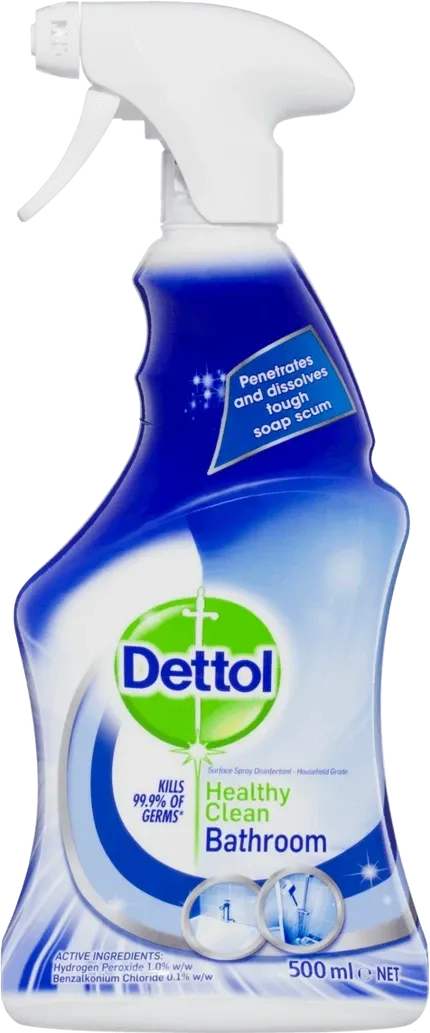
To keep your bathroom clean and hygienic, try the Dettol Healthy Clean Bathroom Spray, suitable for use on sink & tiles, baths, toilet seats, sealed wooden surfaces, glass surfaces, bins, and floors.
Wash affected clothing, beddings and other soft fabric items (e.g., soft toys) in a washing machine on a hot cycle. If the items have been mouldy for several weeks (e.g., heavy jackets at the back of the closet), it may not be possible for all the mould to be removed and they may need to be disposed of.2
Soft furnishing that cannot be washed in a washing machine, such as on carpet or upholstered sofas, will have to be cleaned professionally. If this is not possible, they may need to be replaced.2
There are three key steps to preventing mould from growing in your home. These are:
If the area affected by mould is large and dense, or you are having trouble getting rid of it or remedying the source (i.e., moist environment with poor airflow), then you may require professional assistance. You can get help by contacting:1
These professionals are certified, have the right equipment and get special training to provide mould removal services. For a fee, they can provide mould testing and consultancy services to help find the source of the problem and find a solution .1
RB-M-104887.
[DISCLAIMER]
Always read the label and follow the directions for use.
[FOOTNOTE]
References:
Dissolves tough soap scum
First published: 15th February 2021
Last updated: 4th June 2024
Cleaning and disinfecting your home can help remove germs. But how do you disinfect your house? Here we talk through what to clean and provide tips on cleaning methods around the house.
Bedrooms can be a haven for dust and allergens. With so many hours spent in bed every night, your bedroom is one of the most important rooms to keep clean and hygienic to prevent dust and allergens from collecting.
First formulated in 1929 and Dettol soon found a place in the home, in addition to being used in hospitals and by doctors. Today, we are a world leading hygiene brand trusted by millions.


